The Gods of Mount Olympus Family Tree Worksheet Answers
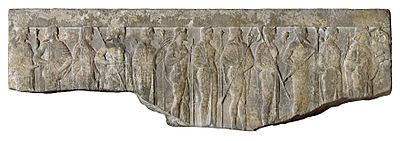
Fragment of a Hellenistic relief (1st century BC–1st century Advertizing) depicting the twelve Olympians conveying their attributes in procession; from left to right: Hestia (scepter), Hermes (winged cap and staff), Aphrodite (veiled), Ares (helmet and spear), Demeter (scepter and wheat sheaf), Hephaestus (staff), Hera (scepter), Poseidon (trident), Athena (owl and helmet), Zeus (thunderbolt and staff), Artemis (bow and quiver), Apollo (lyre), from the Walters Art Museum.[1]
In ancient Greek religion and mythology, the twelve Olympians are the major deities of the Greek pantheon, commonly considered to be Zeus, Hera, Poseidon, Demeter, Athena, Apollo, Artemis, Ares, Hephaestus, Aphrodite, Hermes, and either Hestia or Dionysus.[2] They were called Olympians considering, according to tradition, they resided on Mountain Olympus.
Although Hades was a major ancient Greek god and was the blood brother of the first generation of Olympians (Zeus, Poseidon, Hera, Demeter, and Hestia), his realm was the underworld, far from Olympus, and thus he was not usually considered to be ane of the Olympians.
Besides the twelve Olympians, at that place were many other cultic groupings of twelve gods.
Olympians [edit]
The Olympians were a race of deities, primarily consisting of a 3rd and 4th generation of immortal beings, worshipped as the primary gods of the Greek pantheon and so named because of their residency atop Mountain Olympus. They gained their supremacy in a ten-year-long war of gods, in which Zeus led his siblings to victory over the previous generation of ruling gods, the Titans. They were a family of gods, the nigh of import consisting of the first generation of Olympians, offspring of the Titans Cronus and Rhea: Zeus, Poseidon, Hera, Demeter and Hestia, along with the chief offspring of Zeus: Athena, Apollo, Artemis, Ares, Aphrodite,[3] Hephaestus, Hermes, and Dionysus. Although Hades was a major deity in the Greek pantheon and was the brother of Zeus and the other first generation of Olympians, his realm was far away from Olympus in the underworld, and thus he was non usually considered to exist one of the Olympians.[iv] Olympic gods can exist contrasted to chthonic gods[5] including Hades, by mode of sacrifice, the latter receiving sacrifices in a bothros ( βόθρος , "pit") or megaron ( μέγαρον , "sunken chamber")[6] rather than at an altar.
The canonical number of Olympian gods was twelve, only likewise the (thirteen) chief Olympians listed above, there were many other residents of Olympus, who thus might be considered to be Olympians.[7] Heracles became a resident of Olympus after his apotheosis and married another Olympian resident Hebe.[eight] In the Iliad, the goddess Themis, who is listed amid the twelve Titans, dwells on Olympus alongside the other gods,[9] making her a Titan and an Olympian at the aforementioned fourth dimension. According to Hesiod, the children of Styx: Zelus (Green-eyed), Nike (Victory), Kratos (Strength), and Bia (Force), "have no business firm apart from Zeus, nor any dwelling nor path except that wherein God leads them, but they dwell always with Zeus".[10] Some others who might be considered Olympians include the Muses, the Graces, Iris, Dione, Eileithyia, the Horae, and Ganymede.[eleven]
Twelve gods [edit]
Likewise the twelve Olympians, in that location were many other diverse cultic groupings of twelve gods throughout ancient Greece. The primeval evidence of Greek religious practice involving twelve gods (Greek: δωδεκάθεον , dōdekátheon , from δώδεκα dōdeka , "twelve", and θεοί theoi , "gods") comes no earlier than the late sixth century BC.[12] According to Thucydides, an altar of the twelve gods was established in the agora of Athens by the archon Pisistratus (son of Hippias and the grandson of the tyrant Pisistratus), around 522 BC.[13] The altar became the central indicate from which distances from Athens were measured and a place of supplication and refuge.[14]
Olympia apparently likewise had an early tradition of twelve gods.[xv] The Homeric Hymn to Hermes (c. 500 BC) has the god Hermes divide a cede of two cows he has stolen from Apollo, into twelve parts, on the banks of the river Alpheus (presumably at Olympia):
Side by side glad-hearted Hermes dragged the rich meats he had prepared and put them on a smooth, flat stone, and divided them into twelve portions distributed by lot, making each portion wholly honorable.[16]
Pindar, in an ode written to be sung at Olympia c. 480 BC, has Heracles sacrificing, alongside the Alpheus, to the "twelve ruling gods":[17]
He [Heracles] enclosed the Altis all effectually and marked it off in the open, and he made the encircling area a resting-identify for feasting, honoring the stream of the Alpheus forth with the twelve ruling gods.[18]
Another of Pindar's Olympian odes mentions "six double altars".[19] Herodorus of Heraclea (c. 400 BC) as well has Heracles founding a shrine at Olympia, with six pairs of gods, each pair sharing a single chantry.[20]
Many other places had cults of the twelve gods, including Delos, Chalcedon, Magnesia on the Maeander, and Leontinoi in Sicily.[21] As with the twelve Olympians, although the number of gods was fixed at twelve, the membership varied.[22] While the majority of the gods included as members of these other cults of twelve gods were Olympians, non-Olympians were also sometimes included. For example, Herodorus of Heraclea identified the six pairs of gods at Olympia as: Zeus and Poseidon, Hera and Athena, Hermes and Apollo, the Graces and Dionysus, Artemis and Alpheus, and Cronus and Rhea.[23] Thus, while this list includes the 8 Olympians: Zeus, Poseidon, Hera, Athena, Hermes, Apollo, Artemis, and Dionysus, information technology likewise contains 3 articulate not-Olympians: the Titan parents of the first generation of Olympians, Cronus and Rhea, and the river god Alpheus, with the status of the Graces (here apparently counted as one god) being unclear.
Plato connected "twelve gods" with the twelve months and implies that he considered Pluto one of the twelve in proposing that the final month be devoted to him and the spirits of the dead.[24]
The Roman poet Ennius gives the Roman equivalents (the Dii Consentes ) as six male person-female complements,[25] preserving the place of Vesta (Greek Hestia), who played a crucial role in Roman faith as a country goddess maintained by the Vestals.
List [edit]
In that location is no unmarried approved list of the twelve Olympian gods. The thirteen Greek gods and goddesses, along with their Roman counterparts, most ordinarily considered to be one of the twelve Olympians are listed below.
| Greek | Roman | Paradigm | Functions and attributes |
|---|---|---|---|
| Zeus | Jupiter | 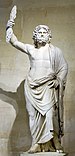 | Male monarch of the gods and ruler of Mount Olympus; god of the sky, lightning, thunder, law, order and justice. The youngest child of the Titans Cronus and Rhea. Brother and husband of Hera and brother of Poseidon, Hades, Demeter, and Hestia. He had many affairs with goddesses and mortals, such as his sister Demeter, the Titan Leto, mortals Leda and Alcmene, and more than.[26] His symbols include the thunderbolt, eagle, oak tree, bull, scepter, and scales. |
| Hera | Juno |  | Queen of the gods and the goddess of marriage, women, childbirth and family. The youngest girl of Cronus and Rhea. Sister and married woman of Zeus. Being the goddess of wedlock, she frequently tried to get revenge on Zeus' lovers and their children. Her symbols include the peacock, cuckoo, and cow. |
| Poseidon | Neptune |  | God of the seas, h2o, storms, hurricanes, earthquakes and horses. The middle son of Cronus and Rhea. Brother of Zeus and Hades. Married to the Nereid Amphitrite; although, as with many of the male person Greek gods, he had many lovers. His symbols include the horse, balderdash, dolphin, and trident. |
| Demeter | Ceres | 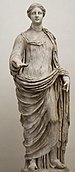 | Goddess of the harvest, fertility, agriculture, nature and the seasons. She presided over grains and the fertility of the earth. The middle daughter of Cronus and Rhea. Also the lover of Zeus and Poseidon, and the mother of Persephone, Despoine, Arion. Her symbols include the poppy, wheat, torch, cornucopia, and pig. |
| Athena | Minerva | 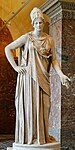 | Goddess of wisdom, handicraft, and warfare.[27] The daughter of Zeus and the Oceanid Metis, she rose from her father's caput fully grown and in full boxing armor. Her symbols include the owl and the olive tree. |
| Apollo / Apollon | Apollo |  | God of light, the Sun, prophecy, philosophy, archery, truth, inspiration, poetry, music, arts, manly beauty, medicine, healing, and plague. The son of Zeus and Leto, and the twin brother of Artemis. His symbols include the Sun, bow and pointer, lyre, swan, and mouse. |
| Artemis | Diana |  | Goddess of the hunt, the wilderness, virginity, the Moon, archery, childbirth, protection and plague. The daughter of Zeus and Leto, and the twin sister of Apollo. Her symbols include the Moon, horse, deer, hound, she-bear, snake, cypress tree, and bow and arrow. |
| Ares | Mars | 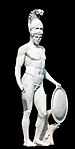 | God of war, violence, bloodshed and manly virtues. The son of Zeus and Hera, all the other gods despised him except Aphrodite. His Latin proper noun, Mars, gave us the discussion "martial." His symbols include the boar, snake, dog, vulture, spear, and shield. |
| Aphrodite | Venus | 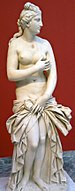 | Goddess of love, pleasance, passion, procreation, fertility, beauty and desire. The daughter of Zeus and the Oceanid Dione, or perhaps built-in from the body of water cream afterward Uranus' claret dripped into the bounding main afterwards existence castrated by his youngest son, Cronus, who then threw his father'southward genitals into the body of water. Married to Hephaestus, although she had many adulterous affairs, most notably with Ares. Her name gave us the give-and-take "aphrodisiac", while her Latin name, Venus, gave us the discussion "venereal". Her symbols include the dove, bird, apple, bee, swan, myrtle, and rose. |
| Hephaestus | Vulcan | 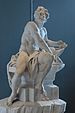 | Main blacksmith and craftsman of the gods; god of the forge, craftsmanship, invention, burn down and volcanoes. The son of Hera, either by Zeus or through parthenogenesis. Married to Aphrodite. His Latin name, Vulcan, gave u.s.a. the word "volcano." His symbols include fire, anvil, axe, donkey, hammer, tongs, and quail. |
| Hermes | Mercury |  | Messenger of the gods; god of travel, commerce, advice, borders, eloquence, diplomacy, thieves, and games. He was besides the guide of dead souls. The son of Zeus and the nymph Maia. The second-youngest Olympian, just older than Dionysus. His symbols include the caduceus (staff entwined with two snakes), winged sandals and cap, stork, and tortoise (whose shell he used to invent the lyre). |
| Most lists of the "twelve Olympians" consist of the above 11 plus either Hestia or Dionysus | |||
| Hestia | Vesta |  | Goddess of the hearth, fire and of the right ordering of domesticity and the family; she was born into the first Olympian generation and was one of the original twelve Olympians. She is the first child of Cronus and Rhea, the elderberry sis of Hades, Demeter, Poseidon, Hera, and Zeus. |
| Dionysus / Bacchus | Bacchus |  | God of wine, the grapevine, fertility, festivity, ecstasy, madness and resurrection. Patron god of the art of theatre. The son of Zeus and the mortal Theban princess Semele. Married to the Cretan princess Ariadne. The youngest Olympian god, as well as the but one to have a mortal mother. His symbols include the grapevine, ivy, loving cup, tiger, panther, leopard, dolphin, goat, and pinecone. |
Genealogy [edit]
| Major Olympians' family tree[28] | |||||||||||||||||||||||||||||||||||||||||||||||||||||||||||||||||||||||||||||||||||||||||||||||||||||||||||||||||||||||||||||||||||||||||||||||||||||||||||||||||||||||||||||||||||||||||||||||||||||||||||||||||||||||||||||||||||||||||||||||||||||||||||||||||||||||||||||||||||||||||||||||||||||||||||||||||||||||||||||||||||||||||||||||||||||||||||||||||||||||||||||||||||||||||||||||||||||||||||||||||||||||||||||||||||||||||||||||||||||||||||||||||||||||||||||||||||||||||||||||||||||||||||||||||||||||||||||||||||||||||||||||||||||||||||||||||||||||||||||||||||||||||||||||||||||||||||||||||||||||||||||||||||||||||||||||||||||||||||||||||||||||||||||||||||||||||||||||||||||||||||||||||||||||||||||||||||||||||||||||||||||||||||||||||||||||||||||||||||||||||||||||||||||||||||||||||||||||||||||||||||||||||||||||||||||||||||||||||||||||||||||||||||||||||||||||||||||||||||||||||||||||||||||||||||||||||||||||||||||||||||||||||||||||||||
|---|---|---|---|---|---|---|---|---|---|---|---|---|---|---|---|---|---|---|---|---|---|---|---|---|---|---|---|---|---|---|---|---|---|---|---|---|---|---|---|---|---|---|---|---|---|---|---|---|---|---|---|---|---|---|---|---|---|---|---|---|---|---|---|---|---|---|---|---|---|---|---|---|---|---|---|---|---|---|---|---|---|---|---|---|---|---|---|---|---|---|---|---|---|---|---|---|---|---|---|---|---|---|---|---|---|---|---|---|---|---|---|---|---|---|---|---|---|---|---|---|---|---|---|---|---|---|---|---|---|---|---|---|---|---|---|---|---|---|---|---|---|---|---|---|---|---|---|---|---|---|---|---|---|---|---|---|---|---|---|---|---|---|---|---|---|---|---|---|---|---|---|---|---|---|---|---|---|---|---|---|---|---|---|---|---|---|---|---|---|---|---|---|---|---|---|---|---|---|---|---|---|---|---|---|---|---|---|---|---|---|---|---|---|---|---|---|---|---|---|---|---|---|---|---|---|---|---|---|---|---|---|---|---|---|---|---|---|---|---|---|---|---|---|---|---|---|---|---|---|---|---|---|---|---|---|---|---|---|---|---|---|---|---|---|---|---|---|---|---|---|---|---|---|---|---|---|---|---|---|---|---|---|---|---|---|---|---|---|---|---|---|---|---|---|---|---|---|---|---|---|---|---|---|---|---|---|---|---|---|---|---|---|---|---|---|---|---|---|---|---|---|---|---|---|---|---|---|---|---|---|---|---|---|---|---|---|---|---|---|---|---|---|---|---|---|---|---|---|---|---|---|---|---|---|---|---|---|---|---|---|---|---|---|---|---|---|---|---|---|---|---|---|---|---|---|---|---|---|---|---|---|---|---|---|---|---|---|---|---|---|---|---|---|---|---|---|---|---|---|---|---|---|---|---|---|---|---|---|---|---|---|---|---|---|---|---|---|---|---|---|---|---|---|---|---|---|---|---|---|---|---|---|---|---|---|---|---|---|---|---|---|---|---|---|---|---|---|---|---|---|---|---|---|---|---|---|---|---|---|---|---|---|---|---|---|---|---|---|---|---|---|---|---|---|---|---|---|---|---|---|---|---|---|---|---|---|---|---|---|---|---|---|---|---|---|---|---|---|---|---|---|---|---|---|---|---|---|---|---|---|---|---|---|---|---|---|---|---|---|---|---|---|---|---|---|---|---|---|---|---|---|---|---|---|---|---|---|---|---|---|---|---|---|---|---|---|---|---|---|---|---|---|---|---|---|---|---|---|---|---|---|---|---|---|---|---|---|---|---|---|---|---|---|---|---|---|---|---|---|---|---|---|---|---|---|---|---|---|---|---|---|---|---|---|---|---|---|---|---|---|---|---|---|---|---|---|---|---|---|---|---|---|---|---|---|---|---|---|---|---|---|---|---|---|---|---|---|---|---|---|---|---|---|---|---|---|---|---|---|---|---|---|---|---|---|---|---|---|---|---|---|---|---|---|---|---|---|---|---|---|---|---|---|---|---|---|---|---|---|---|---|---|---|---|---|---|---|---|---|---|---|---|---|---|---|---|---|---|---|---|---|---|---|---|---|---|---|---|---|---|---|---|---|---|---|---|---|---|---|---|---|---|---|---|---|---|---|---|---|---|---|---|---|---|---|---|---|---|---|---|---|---|---|---|---|---|---|---|---|---|---|---|---|---|---|---|---|---|---|---|---|---|---|---|---|---|---|---|---|---|---|---|---|---|---|---|---|---|---|---|---|---|---|---|---|---|---|---|---|---|---|---|---|---|---|---|---|---|---|---|---|---|---|---|---|---|---|---|---|---|---|---|---|---|---|---|---|---|---|---|---|---|---|---|---|---|---|---|---|---|---|---|---|---|---|---|---|---|---|---|---|---|---|---|---|---|---|---|---|---|---|---|---|---|---|---|---|---|---|---|---|---|---|---|---|---|---|---|---|---|---|---|---|---|---|---|---|---|---|---|---|---|---|---|---|---|---|---|---|---|---|---|---|---|---|---|---|---|---|---|---|---|---|---|---|---|---|---|---|---|---|---|---|---|---|---|---|---|---|---|---|---|---|---|---|---|---|---|---|---|---|---|---|---|---|---|---|---|---|---|---|---|---|---|---|---|---|---|---|
| |||||||||||||||||||||||||||||||||||||||||||||||||||||||||||||||||||||||||||||||||||||||||||||||||||||||||||||||||||||||||||||||||||||||||||||||||||||||||||||||||||||||||||||||||||||||||||||||||||||||||||||||||||||||||||||||||||||||||||||||||||||||||||||||||||||||||||||||||||||||||||||||||||||||||||||||||||||||||||||||||||||||||||||||||||||||||||||||||||||||||||||||||||||||||||||||||||||||||||||||||||||||||||||||||||||||||||||||||||||||||||||||||||||||||||||||||||||||||||||||||||||||||||||||||||||||||||||||||||||||||||||||||||||||||||||||||||||||||||||||||||||||||||||||||||||||||||||||||||||||||||||||||||||||||||||||||||||||||||||||||||||||||||||||||||||||||||||||||||||||||||||||||||||||||||||||||||||||||||||||||||||||||||||||||||||||||||||||||||||||||||||||||||||||||||||||||||||||||||||||||||||||||||||||||||||||||||||||||||||||||||||||||||||||||||||||||||||||||||||||||||||||||||||||||||||||||||||||||||||||||||||||||||||||||||
See also [edit]
- Dii Consentes, the Roman equivalent of the twelve Olympians
- Family tree of the Greek gods
- Interpretatio graeca, including a tabular array of mythological equivalents
- Listing of Greek mythological characters
- Supreme Quango of Ethnikoi Hellenes
- Hellenismos
- Olympia
- Olympians (Marvel Comics)
- Olympian Gods (DC Comics)
- Olympian spirits
- Percy Jackson & the Olympians
Notes [edit]
- ^ Walters Art Museum, accession number 23.forty.
- ^ Hansen, p. 250; Burkert, pp. 125 ff.; Dowden, p. 43; Chadwick, p. 85; Müller, pp. 419 ff.; Pache, pp. 308 ff.; Thomas, p. 12; Shapiro, p. 362; Long, pp. 140–141; Morford, p. 113; Hard p. 80.
- ^ Co-ordinate to Homer, Aphrodite was the daughter of Zeus (Iliad 3.374, 20.105; Odyssey 8.308, 320) and Dione (Iliad 5.370–71), see Gantz, pp. 99–100. Nonetheless, According to Hesiod, Theogony 183–200, Aphrodite was born from Uranus' severed genitals, see Gantz, pp. 99–100.
- ^ Hansen, p. 250; Morford, p. 113; Difficult p. lxxx.
- ^ Chadwick, p. 85.
- ^ Dillon, p. 114.
- ^ Ogden, pp. two–3; Dowden, p. 43; Hansen, p. 250; Burkert, p. 125.
- ^ Herodotus, 2.43–44.
- ^ Homer, Iliad 15.88
- ^ Hesiod, Theogony 386–388.
- ^ Simply who might be called an Olympian is not entirely clear. For case, Dowden, p. 43, describes Heracles, Hebe, the Muses, and the Graces as Olympians, and on p. 45, lists Iris, Dione, and Eileithyia among the Homeric Olympians, while Hansen, p. 250, describes Heracles, Hebe, the Horae, and Ganymede as notable residents of Olympus, but says they "are not ordinarily classified as Olympians".
- ^ Dowden, p. 43; Rutherford, p. 43.
- ^ Rutherford, pp. 43–44; Thucydides, 6.54.half dozen–7.
- ^ Gadbery, p. 447.
- ^ Dowden, p. 43; Rutherford, p. 44; Long, pp. 58–62 (T 13), 154–157.
- ^ Long, pp. 61–62 (T 13 G), 156–157; Homeric Hymn to Hermes, 128–129.
- ^ Dowden, p. 43; Rutherford, p. 44; Long, pp. 59–60 (T 13 C), 154–155.
- ^ Pindar, Olympian 10.49.
- ^ Rutherford, p. 44; Long, pp. 58 (T 13 A), 154; Pindar, Olympian 5.5.
- ^ Dowden, p. 43; Rutherford, p. 47; Long, pp. 58–59 (T 13 B), 154; FGrH 31 F34a-b.
- ^ Rutherford, p. 45; Delos: Long, pp. xi, 87–xc (T 26), 182; Chalcedon: Long, pp. 56–57 (T 11 D), 217–218; Magnesia on the Maeander: Long, pp. 53–54 (T 7), 221–223; Leontinoi: Long, pp. 95–96 (T 32), p. 157.
- ^ Long, pp. 360–361, lists 54 Greek (and Roman) gods, including the thirteen Olympians mentioned to a higher place, who accept been identified every bit members of one or more cultic groupings of twelve gods.
- ^ Dowden, p. 43; Rutherford, p. 47; Hard, p. 81; Long, pp. 58–59 (T thirteen B), 141, 154; FGrH 31 F34a-b.
- ^ Rutherford, pp. 45–46; Plato, The Laws 828 b-d.
- ^ "Greek mythology". Encyclopedia Americana. Vol. xiii. 1993. p. 431.
- ^ Hamilton, Edith. Mythology : timeless tales of gods and heroes. Tierney, Jim. (75th anniversary illustrated ed.). New York. ISBN978-0-316-43852-0. OCLC 1004059928.
- ^ Inc, Merriam-Webster (1995). Merriam-Webster's Encyclopedia of Literature. Merriam-Webster. p. 81. ISBN9780877790426.
- ^ This chart is based upon Hesiod's Theogony, unless otherwise noted.
- ^ Co-ordinate to Homer, Iliad 1.570–579, 14.338, Odyssey 8.312, Hephaestus was patently the son of Hera and Zeus, see Gantz, p. 74.
- ^ Co-ordinate to Hesiod, Theogony 927–929, Hephaestus was produced by Hera alone, with no begetter, run into Gantz, p. 74.
- ^ According to Hesiod, Theogony 886–890, of Zeus' children past his 7 wives, Athena was the first to exist conceived, simply the concluding to be built-in; Zeus impregnated Metis then swallowed her, afterward Zeus himself gave birth to Athena "from his head", come across Gantz, pp. 51–52, 83–84.
- ^ Co-ordinate to Hesiod, Theogony 183–200, Aphrodite was born from Uranus' severed genitals, see Gantz, pp. 99–100.
- ^ According to Homer, Aphrodite was the daughter of Zeus (Iliad 3.374, twenty.105; Odyssey 8.308, 320) and Dione (Iliad 5.370–71), see Gantz, pp. 99–100.
References [edit]
- Burkert, Walter, Greek Religion, Harvard Academy Press, 1985. ISBN 0-674-36281-0.
- Chadwick, John, The Mycenaean World, Cambridge University Press, 1976. ISBN 9780521290371.
- Dillon, Matthew, Girls and Women in Classical Greek Organized religion. London: Routledge. (2002). ISBN 0415202728.
- Dowden, Ken, "Olympian Gods, Olympian Pantheon", in A Companion to Greek Religion, Daniel Ogden editor, John Wiley & Sons, 2010. ISBN 9781444334173.
- Gadbery, Laura M., "The Sanctuary of the Twelve Gods in the Athenian Agora: A Revised View", Hesperia 61 (1992), pp. 447–489.
- Gantz, Timothy, Early Greek Myth: A Guide to Literary and Artistic Sources, Johns Hopkins Academy Press, 1996, Two volumes: ISBN 978-0-8018-5360-9 (Vol. one), ISBN 978-0-8018-5362-3 (Vol. 2).
- Hansen, William, William F. Hansen, Classical Mythology: A Guide to the Mythical World of the Greeks and Romans, Oxford Academy Printing, 2005. ISBN 9780195300352.
- Hard, Robin, The Routledge Handbook of Greek Mythology: Based on H. J. Rose's "Handbook of Greek Mythology", Psychology Press, 2004, ISBN 9780415186360. Google Books.
- Herodotus; Histories, A. D. Godley (translator), Cambridge: Harvard University Press, 1920; ISBN 0674991338. Online version at the Perseus Digital Library.
- Hesiod, Theogony, in The Homeric Hymns and Homerica with an English Translation by Hugh Thousand. Evelyn-White, Cambridge, Massachusetts., Harvard University Press; London, William Heinemann Ltd. 1914. Online version at the Perseus Digital Library.
- Homer, The Iliad with an English language Translation by A. T. Murray, Ph.D., in two volumes. Cambridge, Massachusetts., Harvard University Press; London, William Heinemann, Ltd. 1924. Online version at the Perseus Digital Library. – via Wikisource.
- Homer; The Odyssey with an English Translation by A. T. Murray, Ph.D., in two volumes. Cambridge, Massachusetts., Harvard University Press; London, William Heinemann, Ltd. 1919. Online version at the Perseus Digital Library. Vol. I, Vol. Two at the Internet Archive.
- Homeric Hymn to Hermes (four), in The Homeric Hymns and Homerica with an English Translation by Hugh M. Evelyn-White, Cambridge, Massachusetts., Harvard University Press; London, William Heinemann Ltd. 1914. Online version at the Perseus Digital Library.
- Long, Charlotte R., The Twelve Gods of Greece and Rome, Brill Annal, January 1, 1987. Google Books.
- Morford, Mark P. O., Robert J. Lenardon, Classical Mythology, Eighth Edition, Oxford Academy Press, 2007. ISBN 978-0-xix-530805-one.
- Müller, Karl Otfried, Ancient Art and Its Remains: Or, A Manual of the Archeology of Art, translated by John Leitch, B. Quaritch, 1852.
- Ogden, Daniel "Introduction" to A Companion to Greek Organized religion, Daniel Ogden editor, John Wiley & Sons, 2010. ISBN 9781444334173.
- Pache, Corinne Ondine, "Gods, Greek" in The Oxford Encyclopedia of Ancient Greece and Rome, Volume 3, Oxford Academy Press. 2010. ISBN 9780195170726.
- Pindar, Odes, Diane Arnson Svarlien. 1990.
- Plato, Laws in Plato in Twelve Volumes, Vols. 10 & 11 translated past R. G. Bury. Cambridge, Massachusetts, Harvard University Press; London, William Heinemann Ltd. 1967 & 1968. Online version at the Perseus Digital Library.
- Rutherford, Ian, "Canonizing the Pantheon: the Dodekatheon in Greek Religion and its Origins" in The Gods of Ancient Greece: Identities and Transformations, editors January North. Bremmer, Andrew Erskine, Edinburgh University Press 2010. ISBN 978-0748637980. Online version.
- Shapiro, H. A., "Chapter 20: Olympian Gods at Home and Abroad" in A Companion to Greek Art, editors Tyler Jo Smith, Dimitris Plantzos, John Wiley & Sons, 2012. ISBN 9781118273371.
- Thomas, Edmund, "From the pantheon of the gods to the Pantheon of Rome" in Pantheons: Transformations of a Awe-inspiring Idea, editors Richard Wrigley, Matthew Craske, Ashgate Publishing, Ltd., 2004. ISBN 9780754608080.
- Thucydides, Thucydides translated into English; with introduction, marginal analysis, notes, and indices. Volume 1., Benjamin Jowett. translator. Oxford. Clarendon Press. 1881. Online version at the Perseus Digital Library.
Source: https://en.wikipedia.org/wiki/Twelve_Olympians
0 Response to "The Gods of Mount Olympus Family Tree Worksheet Answers"
Post a Comment